Software Testing Fundamentals && Smoke Testing

Software Testing:
The fastest way to know if a deployment is fundamentally broken — a quick sanity check that runs in minutes and gates every release.
The New Car Mystery
Imagine you just built a car from scratch. Before selling it, what would you test?
Think about different scenarios:
- Does the engine start? (Basic functionality)
- Do all doors open? (Individual components)
- Can it drive on the highway? (Complete journey)
- Does the radio work while driving? (Components working together)
- What happens in a 10-car pile-up? (Extreme stress)
- Can it handle 100,000 miles? (Long-term reliability)
Pause and think:
Would you test these all at once?
Would you test in a specific order?
What if you only had time for one test before the customer arrives?
The Answer: Different Testing Types for Different Goals
Just like testing a car requires multiple approaches, software testing has different types for different purposes:
Smoke Testing:
"Does it turn on?"
Functional Testing:
"Does each feature work?"
Integration Testing:
"Do parts work together?"
System Testing:
"Does the complete system work?"
API Testing:
"Do the interfaces work correctly?"
E2E Testing:
"Can a user complete their journey?"
Stress Testing:
"What breaks it?"
Chaos Testing:
"Can it survive disasters?"
Key insight: No single test type is enough! You need a testing strategy that combines different approaches at different stages!
🏗️ The Testing Pyramid: Foundation of Test Strategy
Before diving into each type, understand how they relate:

Mental model: Like building inspections:
- Bottom (Unit/Functional): Individual bricks are solid
- Middle (Integration): Walls are properly connected
- Top (System/E2E): Entire building is safe to occupy
- Stress/Chaos: Building survives earthquakes
💨 Smoke Testing: "Does It Even Work?"
What is Smoke Testing?
Smoke testing (aka sanity testing) is the quickest, most basic check to verify the software isn't fundamentally broken.
Origin of the name: When hardware engineers power on a circuit board, they check if smoke comes out. No smoke = safe to proceed with more tests!
Real-World Analogy:
Like checking a house before showing it to buyers:
Quick 5-minute walkthrough:
✓ Does the front door open?
✓ Do lights turn on?
✓ Is there electricity?
✓ Does water run?
If YES →
Show the house
If NO →
Fix critical issues first!
Smoke Test Examples:
Web Application:
Smoke Test Suite (runs in 2 minutes):
- Can user load homepage?
- Can user log in?
- Can user see their data?
- Is database responding?
If ALL pass → Deploy to QA environment If ANY fail → Roll back immediately!
E-commerce Platform:
Critical path smoke tests:
□ Homepage loads
□ Search works
□ Product page displays
□ Add to cart functions
□ Checkout button appears
If these fail, nothing else matters!
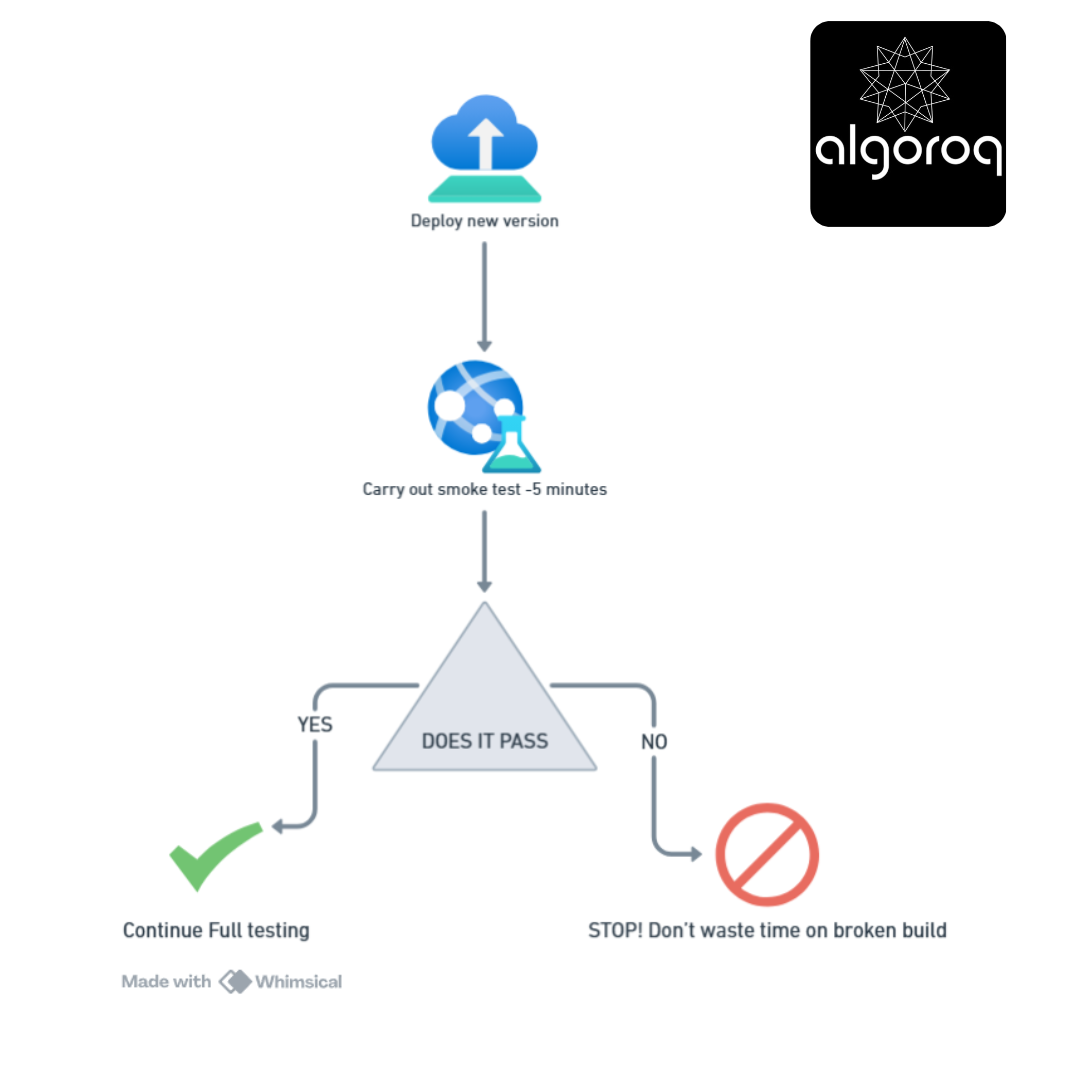
When to Run Smoke Tests:
Development Pipeline:
-
Code Commit
-
Build
-
[Smoke Tests]
-
Pass? → Full Test Suite
↓
FAIL
↓
-
Notify developer immediately!
-
Don't waste time on broken build
Key characteristics:
- ⚡ Fast: 2-10 minutes maximum
- 🎯 Critical path only: Test what matters most
- 🚨 First line of defense: Catch obvious breaks
- 🔄 Run frequently: After every build/deploy
Key Takeaways
- Smoke tests verify basic functionality after a build or deployment — a quick sanity check that the system starts and core features work
- Smoke tests should run fast (under 5 minutes) — they gate deployments, so speed matters more than coverage
- A failing smoke test means the build is fundamentally broken — stop deployment immediately and investigate
- Keep smoke tests focused on critical paths — login, homepage load, primary API health check, database connectivity
Unlock with Pro
Unlock the full content and everything at this level.
Get Pro — $9/moAlready a member? Log in